Top 3 Ancient tunnels in Urban Areas
It may have to do with our childhood experiences, a social consciousness reflection from our cave-dwelling ancestors, a pirate gene, or one of numerous other reasons which can be philosophically debated later, but the simple fact is most people are awed by secret tunnels, hidden passages, and other detective-novel-esque mysteries.
Is there one in your city? Read on to find out.
Subways, Sewers, and Catacombs, Paris
Below the stunning city of Paris, lies a mass of intricately connected sewers, canals, crypts, cellars, and reservoirs, along with old limestone and gypsum quarries that interlink. Throughout are scattered bones of the current population’s ancient ancestors. The tunnels are often strewn with graffiti and graphic artworks by artists turned explorers who want to leave a mark on the world. Below the surface is a world filled with possibilities, and ancient histories. In some places there are Greek amphora that are thousands of years old, and recently the head of a statue of Emperor Constantine was discovered lodged in a sewer. If you want a tour, you’ll need to be careful who you ask. Authorities don’t allow explorers inside the city sewers or older tunnels due to safety concerns, although that doesn’t stop the cataphiles (illegal urban catacomb explorers) from adventuring further afield.
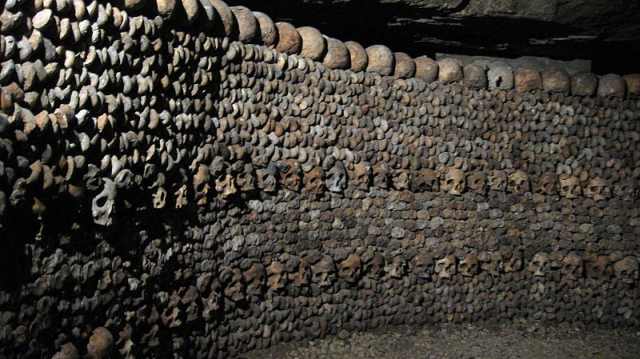
Some of the crypts and catacombs are open to the public however, and these intricate tunnels weave below the city, preserving bodies that are centuries old. Bones of monks from bygone eras are quite well-preserved, if slightly scattered, and archaeologists who explore down here can tell at a glance what it was that the person died from. Entrance can be gained by a minimum group of ten people from the Catacombs of Paris Museum.
Longyou Caves, China
These caves would never have been unearthed, but for the unwavering belief of Wu Anai from Shiyanbei Village, who had a nagging suspicion that the local reservoir was not a naturally occurring one. He spent several weeks pumping water out of the reservoir, and finally cleared it. What he revealed was a massive cavern that looks to have been hand chiselled, but by who and why, no one is certain. So far, due to Wu Anai’s discovery, 24 hand-carved caverns have been unearthed, and each of these offers a glimpse at a sophistication not associated with primitive man.
Denrinkuyu, Nevşehir Province, Turkey
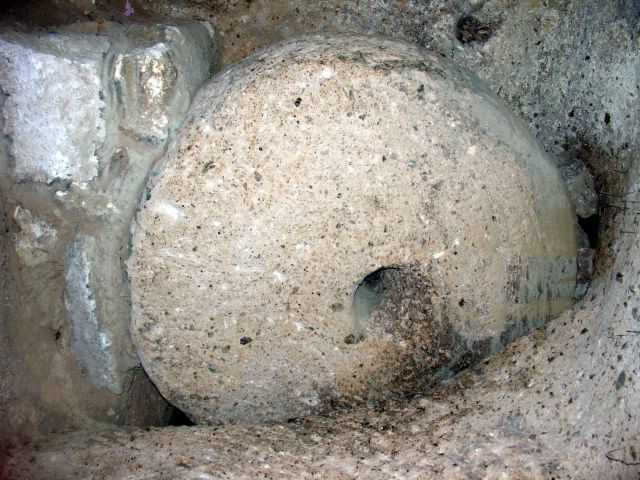
Below the ground, in the Nevsehir Province of Turkey, lies a marvel which is presumed to have been created in the 7th and 8th century by the Phrygians, and later used and expanded on by the Persians. This fully-functioning underground city with thirteen floors once housed 20,000 people and their livestock. It had ample ventilation, underground wells, shops, and even tombs. It was opened to tourists in 1969, and as of yet only half of it is accessible. Giant stones could be rolled over the doorways to prevent enemy invasion, and the tunnels here that run for miles, are connected to other underground cities. There is even an 8km tunnel which connects to Kaymaklli.
Author Bio: Roseanna McBain is a writer for TravelGround, an Ushaka Marine World accommodation and booking website. She enjoys having chilled braais (bbqs) with friends in summer, reading novels in winter, and watching sci-fi series (which haven’t yet been cancelled by Fox).
Images:
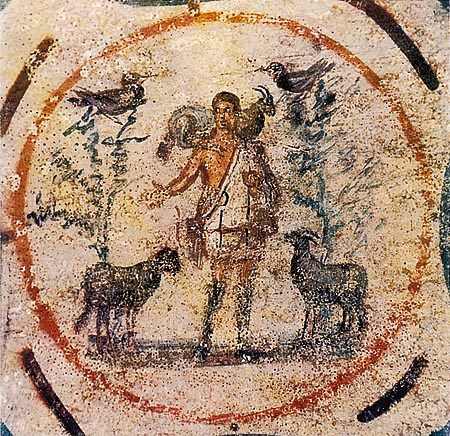
One of the Shepherd paintings found in the catacobs. By Leinad-Z (Creative Commons) – http://en.wikipedia.org/wiki/File:Good_shepherd_01_small.jpg
Door at the underground city of Derinkuyu, Turkey. By Boninho (Creative Commons) – http://en.wikipedia.org/wiki/File:Puerta_derinkuyu.jpg
A pile of bones within the Catacombes of Paris. By Djtox (Creative Commons) – http://en.wikipedia.org/wiki/File:DJJ_1_Catacombes_de_Paris.jpg

Leave a Comment